Aera
Aera is a payment terminal manufacturer developing its terminal software fully in house. Operating in fast moving payment environments, Aera releases new software

With over 14 years of experience, KoCo Connector GmbH has been steadfast in supporting its customers, enabling secure storage, exchange, and retrieval of knowledge and information. By doing so, they facilitate more time for what truly matters – patient care.
Drawing from their extensive market experience and close user engagement, KoCo Connector GmbH has garnered trust from over 60.000 german healthcare professionals. This broad user base is essential for effectively translating technological and medical advancements into practical solutions, ensuring that progress benefits healthcare practices globally.
The testing team at KoCo Connector GmbH was confronted with a multifaceted challenge as they grappled with the evolving landscape of healthcare technology and the increasing demands placed on their flagship product, the TI Connector. With advancements in healthcare technology and the integration of new features and functionalities into the TI Connector, the complexity of the system grew significantly. This complexity was reflected in the sheer volume of test cases associated with the TI Connector, which expanded to approximately 3000 and continued to climb as new features were introduced.
Each test case represented a critical aspect of the TI Connector’s functionality, security, and interoperability. Ensuring comprehensive testing across all these dimensions was essential to maintaining the integrity and reliability of the product. However, the manual testing procedures employed by the team, while meticulous and thorough, proved to be increasingly time-consuming and resource-intensive.
The team found themselves spending a significant amount of time executing repetitive tasks manually, leaving limited resources for more strategic testing activities. As the scope and complexity of the TI Connector continued to grow, the manual testing approach became unsustainable. The team recognized the need for a more efficient and scalable solution to address their testing challenges. Moreover, the team faced the critical task of balancing the imperative for timely project delivery with the equally important goal of ensuring high-quality outcomes. With pressure mounting to meet project deadlines and deliver new features and updates to customers, the team grappled with the inherent tension between speed and quality.
While meeting deadlines was crucial for maintaining customer satisfaction and competitiveness in the market, compromising on quality could have far-reaching consequences for patient safety and system reliability. Thus, the testing team found themselves at a crossroads, confronted with the need to streamline their testing processes while upholding the highest standards of quality assurance.
To tackle the challenges posed by the growing complexity of their testing procedures and the need for faster release cycles, the team at KoCo Connector GmbH embarked on an ambitious journey to explore innovative automation solutions. Drawing upon their wealth of experience and insights gained from past successes, they were inspired to leverage automation technology to revolutionize their testing processes. Their past encounters automated solutions had left a lasting impression, igniting the realization that robotics could offer a transformative solution to their current predicament.
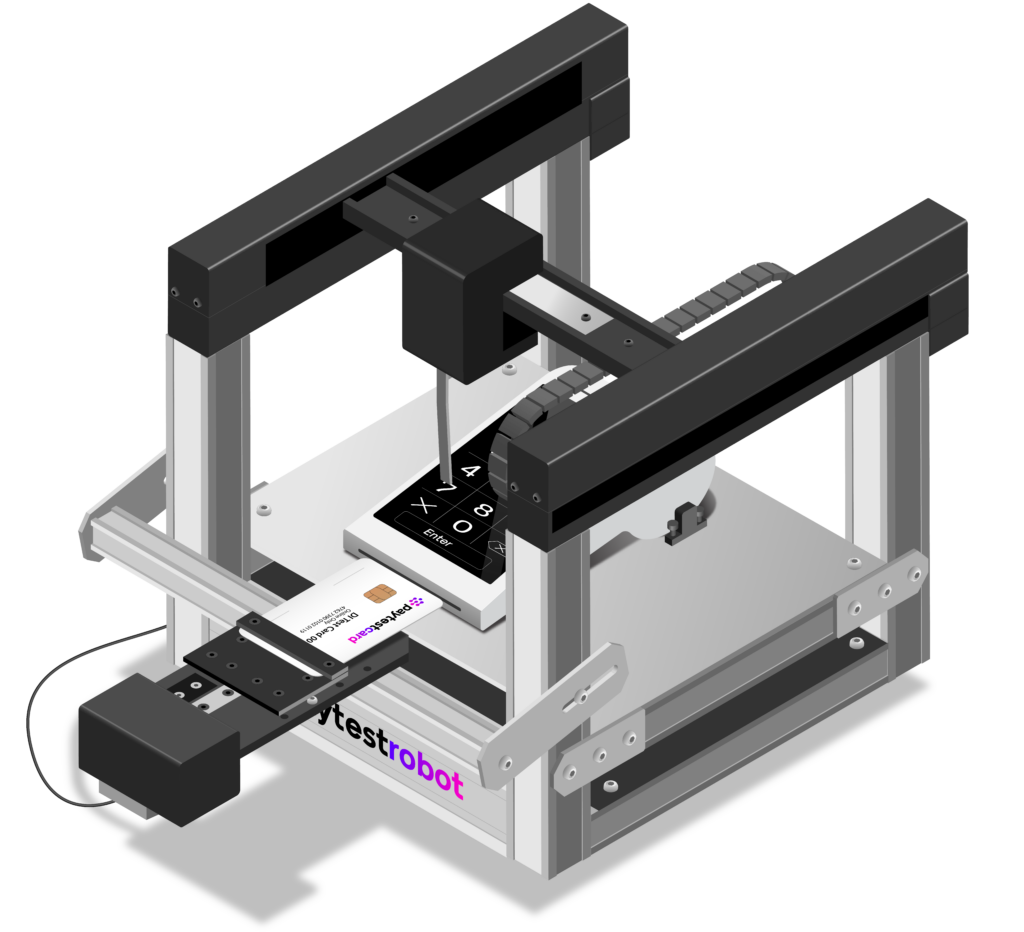
“The standout feature of the robot solution is its ability to automate tasks that were previously unimaginable. The ability to accurately execute card insertion and pin entry repeatedly, 24/7, ensures consistent and reliable results. Speed and repeatability are the key advantages, maintaining consistent test execution and results.” – Andreas Leuchter, Quality Assurance Team Lead
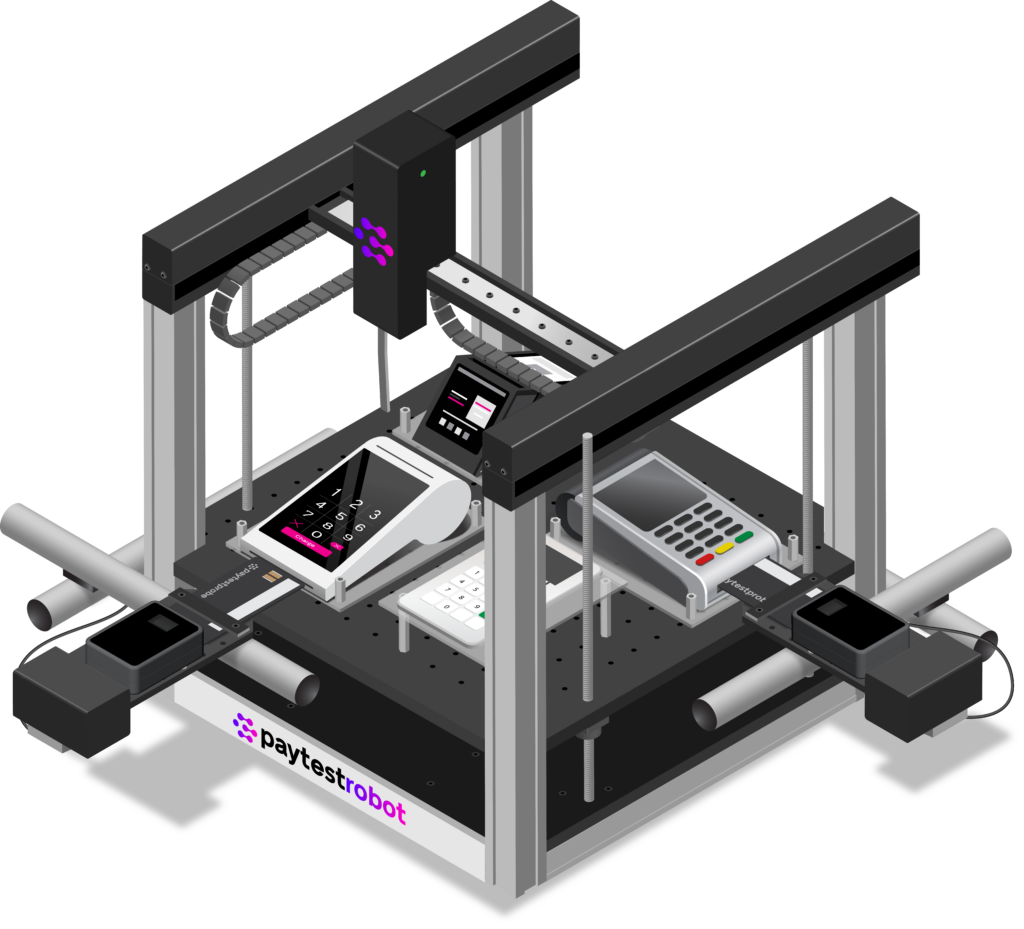
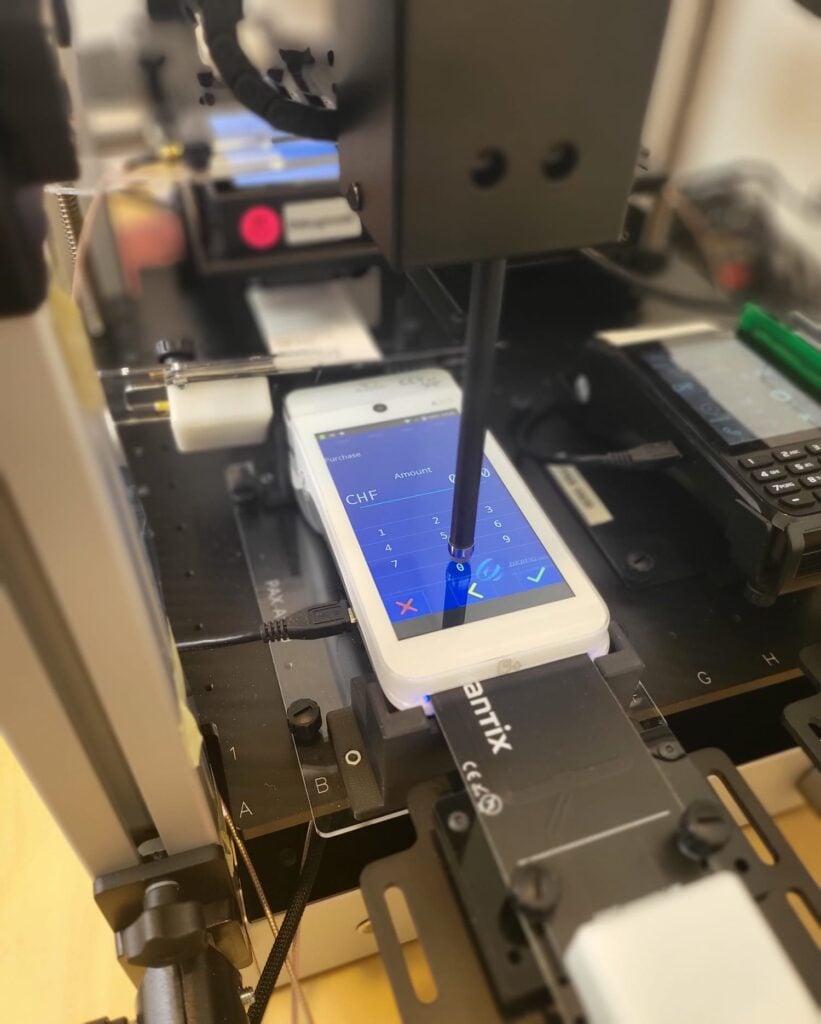
With a clear vision in mind, the team set out to identify opportunities where automation could be seamlessly integrated into their testing workflows. They recognized that certain repetitive tasks, such as card insertion and pin entry, were prime candidates for automation. By automating these labour-intensive and time-consuming processes, they aimed to significantly reduce the manual workload and expedite the overall testing timeline. This strategic move not only promised to streamline testing procedures but also to free up valuable time and resources that could be reallocated to more strategic endeavours.
Furthermore, the team anticipated that automation would enable them to achieve greater scalability and flexibility in their testing efforts. With robots handling repetitive tasks around the clock, the team would no longer be bound by the constraints of manual testing schedules. Instead, they would have the freedom to execute tests at any time, allowing for faster iteration cycles and more rapid feedback loops.
Overall, the decision to embrace automation represented a bold and forward-thinking approach to addressing the evolving demands of their testing processes. By leveraging automated solutions to perform repetitive tasks, the team at KoCo Connector GmbH aimed to usher in a new era of efficiency, agility, and quality in their testing endeavours.
One tester was involved in software development while the other focused on testing the software, and they alternated roles. Eventually, the task was taken over by the robot, allowing the developers to dedicate more time to their development work.
The exact number of tests the robot is able to conduct overnight or during a week varies. Ingenico estimates that over 1000 transactions per night are being completed. The robot performs tests as rapidly as the terminal can process transactions, seamlessly looping them in succession. Despite the terminal’s efficiency, they encountered issues with contactless cards reaching their transaction limits after a few thousand transactions, rendering some cards unusable. This was an issue unknown, as during manual testing no one ever has done so many transactions. To address this, Ingenico started using a simulator to avoid systematically blocking their cards.
Implementing automation at KoCo Connector GmbH involved careful planning and several critical steps. Initially, the team sought out a modern testing robot capable of autonomously running pre-defined tests accurately and efficiently. This necessitated thorough research and evaluation to identify the right solution that aligned with their specific needs for functionality, reliability, and compatibility with existing systems.
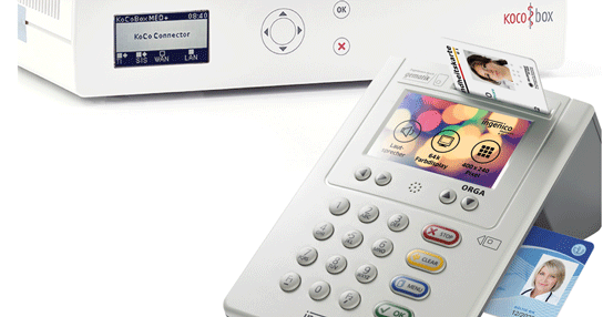
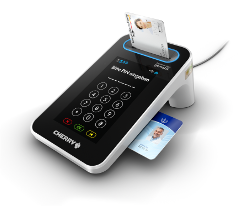
Once the team selected PaytestLab automated solutions as their preferred vendor, they proceeded with the configuration process to seamlessly integrate it into their testing environment. This involved meticulous setup to accurately simulate real-world testing scenarios, including interactions with hardware components like their two card terminals eHealth Terminal ST-1506 and Ingenico ORGA 6141. The team diligently established interfaces between the robot and these components to ensure smooth communication and interaction during testing. Additionally, they implemented remote access and control mechanisms to facilitate easy monitoring and management of the robot’s operations.
“The successful implementation of PaytestLab automated solutions has significantly reduced our testing time to approximately one week or less. With its 24/7 operational capability, our testing capabilities have seen a remarkable acceleration,” – Andreas Leuchter, Quality Assurance Team Lead.
The impact on testing efficiency was remarkable. The team experienced a substantial reduction in testing time, thanks to PaytestRobot’s ability to execute test cases autonomously and consistently. This newfound efficiency had tangible benefits for the release cycle, with the potential to shrink it from four weeks to approximately one week. By automating repetitive tasks previously performed manually, the team achieved a higher level of accuracy and reliability in test execution, leading to more precise results across all test cases.
Moreover, the implementation of automation freed up valuable resources that were previously tied up in manual testing efforts. With PaytestRobot handling repetitive tasks autonomously, team members redirected their time and energy towards more strategic initiatives, such as test case development and software enhancement. This not only enhanced overall productivity but also enabled the team to focus on areas adding greater value to the testing process, contributing to the ongoing improvement of their IT solutions. Ultimately, this resulted in enhanced quality and satisfaction for their customers and end-users.

Aera is a payment terminal manufacturer developing its terminal software fully in house. Operating in fast moving payment environments, Aera releases new software

Faced with increasing regression demands and the limitations of manual card testing, KWI turned to PaytestLab’s PaytestRobot to automate real-world payment transactions across

Worldline is a leading global provider of payment and transactional services, operating in the fintech and digital payments sector. Known for offering innovative
Abrantix is a Swiss software innovator in payment solutions, delivering advanced EFTPOS terminal software for secure, efficient global transactions. Known for quality and

Ingenico Switzerland, a vital subsidiary of the global Ingenico Group, pioneers secure and innovative electronic payment solutions, offering tailored services and cutting-edge payment
Nexi Switzerland, an integral part of the European PayTech Nexi Group, is composed of a team of approximately 100+ dedicated individuals committed to

Revel Systems, with nearly 600 employees in multiple locations, offers a leading cloud POS platform. Unlike competitors, they collaborate with various payment providers,